Innovate

Khasm Labs
5
min read

As organizations embrace AI, automation, IoT, and real-time data processing, traditional network infrastructure is being pushed to its limits. Applications that once relied on centralized cloud environments now require low-latency connectivity, local processing power, and reliable coverage across large operational environments.
This shift is driving increased adoption of private 5G networks and enterprise edge computing, giving organizations greater control over performance, security, and scalability. However, moving from a successful pilot project to a full production deployment remains one of the biggest challenges enterprises face.
The difference between a promising proof of concept and a production-ready network often comes down to having the right strategy, architecture, and operational goals from the start.
Start with the Problem, Not the Technology
The most successful deployments begin with a clear understanding of the business challenge being addressed. Whether the goal is improving connectivity across a warehouse, supporting autonomous systems in a distribution yard, enabling AI-powered computer vision, or reducing application latency, the technology should serve a specific operational purpose.
Organizations that focus on measurable business outcomes tend to see faster adoption and stronger results. Rather than viewing private 5G as a networking upgrade, they approach it as a platform for enabling new capabilities and improving day-to-day operations.
Designing for Real-World Operations
Once objectives are established, the focus shifts to building an architecture that supports the environment where work actually happens. Every deployment is different, with requirements varying based on geography, device density, applications, security policies, and existing infrastructure.

A modern enterprise edge network combines connectivity, compute resources, and security into a cohesive platform that supports operational needs today while remaining flexible enough to accommodate future growth. This approach ensures that organizations are not simply deploying a network, but building a foundation for long-term digital transformation.
Why Pilot Projects Matter
For many enterprises, a pilot deployment serves as the bridge between concept and production. Pilots provide an opportunity to validate coverage, test application performance, and evaluate how new technologies interact with existing workflows.
More importantly, pilots allow organizations to measure real-world impact before making larger investments. Questions around reliability, latency, user experience, and operational efficiency can be answered with data rather than assumptions.
When properly designed, pilot projects create confidence among stakeholders and establish a roadmap for broader deployment.
Turning Results into a Scalable Strategy
A successful pilot is only the beginning. The next step is understanding what worked, what can be improved, and how the solution can scale across additional facilities, devices, and applications.
This evaluation phase is critical because it helps organizations refine their deployment strategy while minimizing risk. Network performance, operational improvements, security requirements, and user adoption all play an important role in determining readiness for production.
By taking the time to optimize before expanding, enterprises can avoid costly redesigns and ensure a smoother transition to larger-scale deployments.
Scaling with Confidence
One of the primary advantages of modern private 5G and edge architectures is their ability to scale without requiring organizations to start over. The same infrastructure that supports a pilot can often be expanded to support larger environments, additional use cases, and multiple locations.
As organizations grow, they frequently add new devices, AI applications, automation systems, and operational workflows. A well-designed enterprise edge network provides the flexibility needed to support these evolving requirements while maintaining consistent performance and security.
This ability to scale efficiently is what transforms a pilot project into a strategic operational asset.
Building for the Future
Enterprise networking is no longer just about connecting devices. It is about creating a platform that can support emerging technologies, changing business needs, and increasingly data-driven operations.
Private 5G and edge computing are becoming foundational components of modern enterprise infrastructure because they enable organizations to process information closer to where it is generated, improve application responsiveness, and maintain greater control over critical systems.
As businesses continue to invest in AI, automation, and connected operations, the ability to move quickly from pilot to production will become an increasingly important competitive advantage.
Accelerating Enterprise Transformation with KEEN
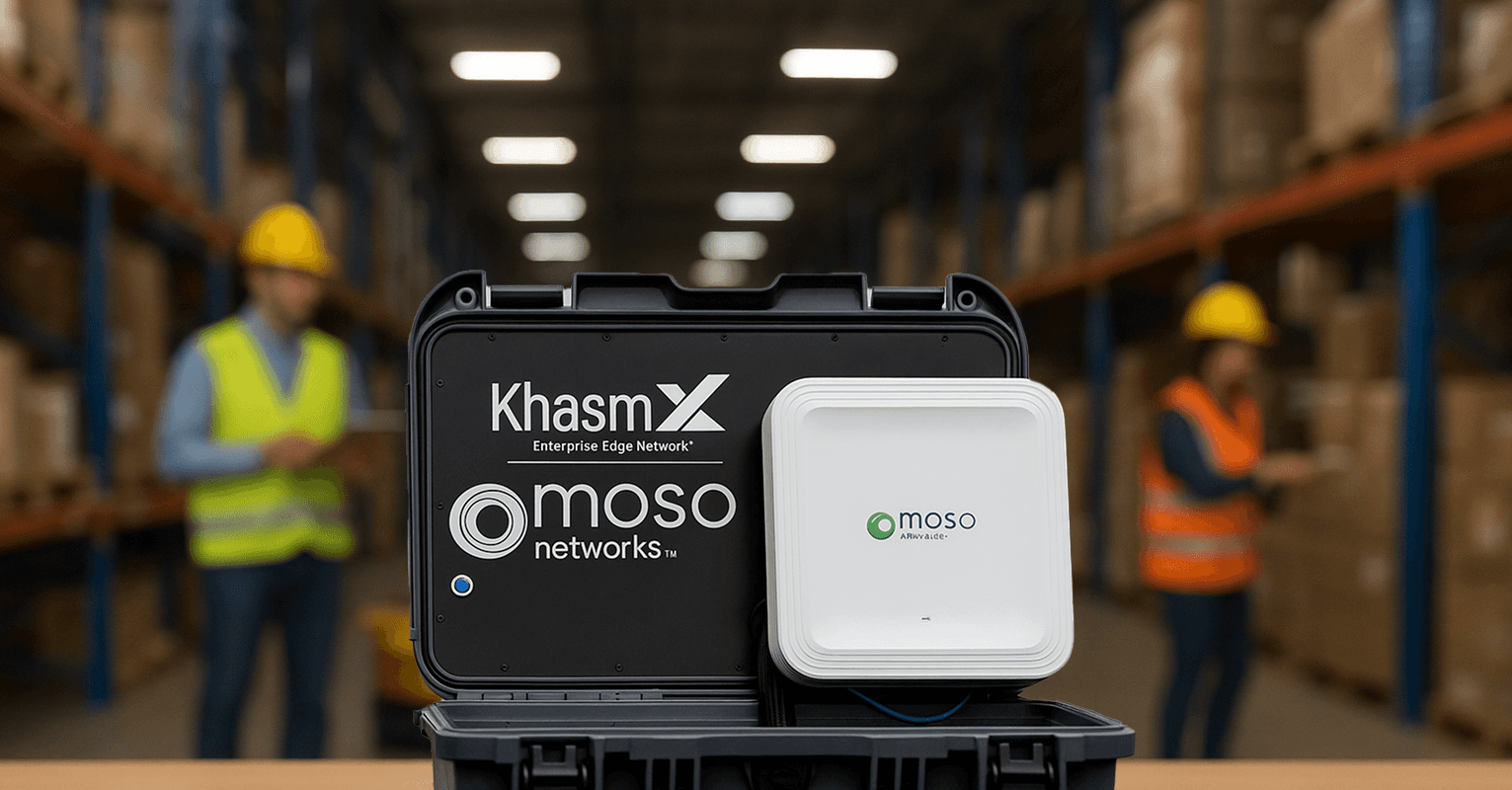
The Khasm Enterprise Edge Network (KEEN) was designed to help organizations simplify this journey. By combining private cellular connectivity, enterprise edge computing, and centralized management, KEEN provides a practical path from initial deployment to full-scale production environments.
Whether supporting industrial operations, logistics networks, public safety initiatives, or AI-driven applications, KEEN enables organizations to deploy with confidence and scale as their needs evolve.
Ready to explore what's possible with private 5G and edge computing?