Innovate

Khasm Labs
5
min read

Private 5G vs Wi-Fi vs Public LTE: What Enterprises Need to Know in 2026
As enterprises modernize their operations, choosing the right enterprise connectivity solution has become a strategic decision. In 2026, organizations are evaluating three primary networking options: Wi-Fi, public LTE, and private 5G.
Each option offers different levels of performance, security, and control - and understanding these differences is essential for supporting modern enterprise applications.
Wi-Fi for Enterprises: Familiar but Limited
Wi-Fi remains widely used in enterprise environments, particularly in offices and small indoor spaces.
Benefits of Wi-Fi
Low upfront cost
Broad device compatibility
Easy deployment for basic connectivity
Limitations of Wi-Fi in Enterprise Operations
Susceptible to interference and congestion
Inconsistent performance in large or industrial environments
Limited mobility and handoff capabilities
Shared spectrum with unpredictable reliability
Wi-Fi struggles to support mission-critical enterprise applications that require deterministic performance and wide-area coverage.

Public LTE for Enterprises: Coverage Without Control
Public LTE networks are operated by mobile carriers and provide wide geographic coverage.
Benefits of Public LTE
Broad regional and national coverage
Minimal on-site infrastructure
Suitable for mobile workforce connectivity
Limitations of Public LTE
Shared public network resources
Limited enterprise control over performance and security
Variable latency and congestion
Ongoing operational costs
For enterprises running critical operations, the lack of control and predictability can be a major drawback.
Private 5G for Enterprises: Built for Performance and Control
Private 5G networks provide enterprises with dedicated cellular infrastructure deployed on-site or across enterprise locations.
Key Advantages of Private 5G
Dedicated spectrum and network resources
Low-latency, predictable performance
Strong enterprise-grade security
Seamless mobility across large areas
High device density for IoT and automation
Native support for edge computing
Private 5G enables enterprises to operate their network as critical infrastructure, rather than relying on shared public services.
Private 5G vs Wi-Fi vs Public LTE: Enterprise Comparison
Feature | Wi-Fi | Public LTE | Private 5G |
Reliability | Low–Medium | Medium | High |
Latency | Variable | Variable | Low & predictable |
Security | Medium | Medium | High |
Coverage | Limited | Wide | Custom enterprise-wide |
Device Density | Limited | Medium | Very high |
Enterprise Control | Low | Low | Full control |
Edge Computing Support | Limited | Limited | Native |
Why Enterprises Are Adopting Private 5G in 2026
As enterprises deploy AI, robotics, automation, and real-time analytics, network performance directly impacts business outcomes.
Private 5G provides:
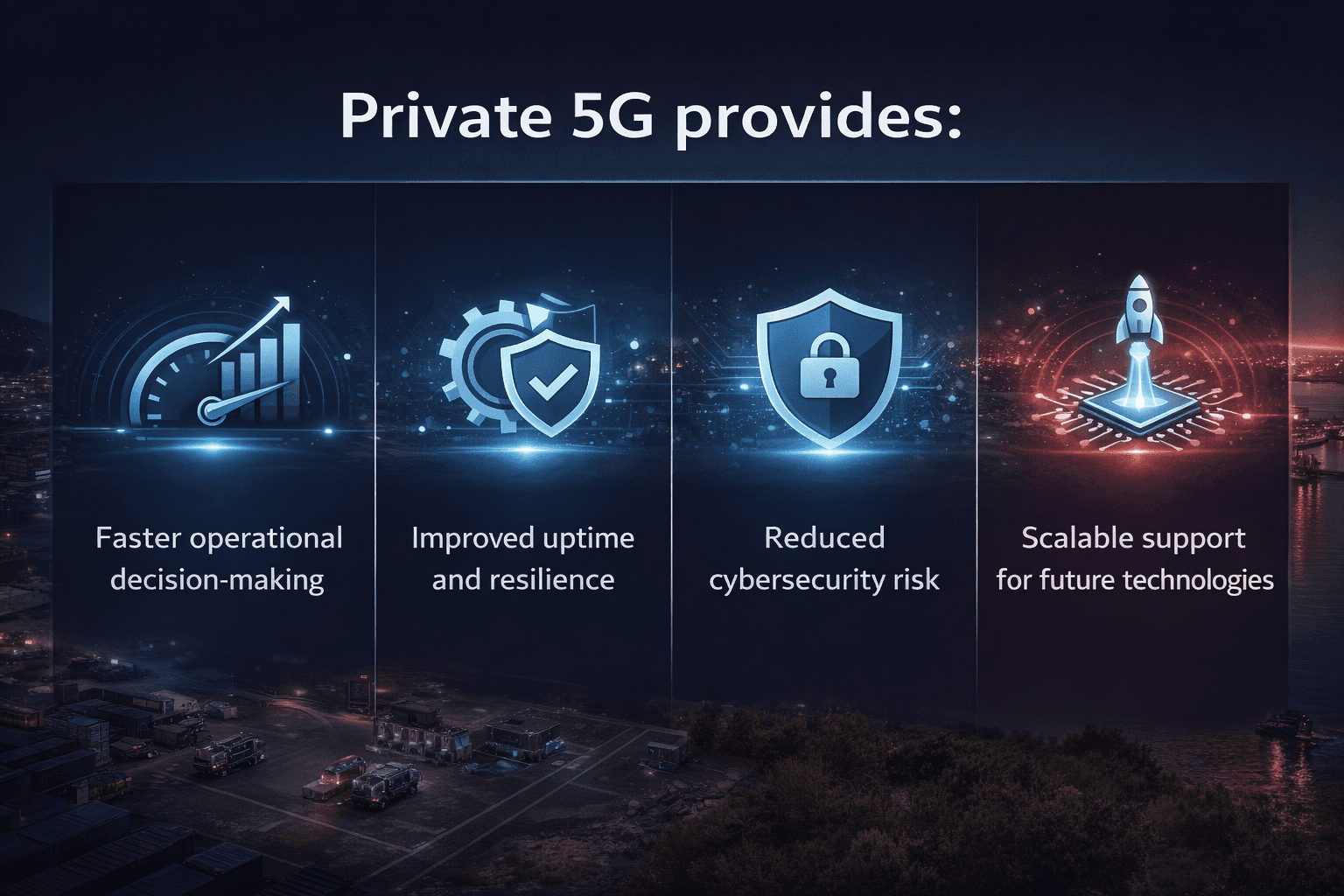
Faster operational decision-making
Improved uptime and resilience
Reduced cybersecurity risk
Scalable support for future technologies
Where Khasm Enterprise Edge Network Fits
Khasm Enterprise Edge Network (KEEN) combines private cellular connectivity with edge computing infrastructure to deliver a complete enterprise networking solution.
KEEN enables enterprises to:
Deploy private 5G networks quickly
Process data locally at the edge
Secure sensitive enterprise data on-site
Scale connectivity across complex environments
Rather than choosing between connectivity and intelligence, KEEN delivers both.
Choosing the Right Enterprise Network in 2026
In 2026, enterprises must evaluate connectivity based on performance, security, and long-term scalability.
While Wi-Fi and public LTE still serve important roles, private 5G and enterprise edge networks are becoming the preferred foundation for mission-critical operations.
Explore how Khasm Enterprise Edge Network supports enterprise private 5G deployments.